
A year of openstatus: the honest digest
May 29, 2026 | by Maximilian Kaske | [company]

A year ago we hit publish on Product Strategy - A Reality Check. It was a tough post to write: ~7,000 GitHub stars, no clear idea of what to charge for, a "self-hosted" story that was mostly duct tape, and a roadmap clogged with features we kept talking about but never shipping (RUM, on-call, incident management).
This post is the receipt for the last 12 months. A breakdown of what we shipped, what we killed, what we got completely wrong, and the people who helped us see our own blind spots. It isn't a highlight reel. It's the raw version we want to look back on a year from now, whether we end up nodding or wincing.
Who's this for? Mostly for us, as a checkpoint. But we figured it belonged on the blog, out in the open.
Spoiler from last year's Reality Check: building this is still hard. Running an open-source startup sometimes feels a bit like riding the Paris-Roubaix. It's brutal, you're constantly rattling over the cobblestones, and you have to keep pushing just to survive the day. But we're still pedaling.
The TL;DR
Over the last 12 months, we got grilled on positioning by Emily Omier and finally killed the mental baggage of RUM and on-call. We dropped "synthetic monitoring" as our headline. We partnered with Alex on design, entirely rebuilding the dashboard and status page. We decoupled our monorepo, migrated our API to a schema-first ConnectRPC setup, and went deep on AI with an MCP server and Slack agent.
In March, Shane O'Connor stepped in to fix our distribution. We launched our first podcast, started treating LinkedIn like a real channel, and redefined our ICP. We also welcomed Colin, our first intern, meaning Max and I are finally not just a two-person team.
Today, we have a focused product, ~1M Google impressions in the last 3 months, and a real, defensible wedge. Here is the honest story of how we got here.
Where we were (and what we had to admit)
If you want a visual receipt of where we were lost, v1.openstatus.dev is still live. It's frozen in December 2025, a snapshot of how easy it is to drift if you aren't paying attention. We were chasing GitHub stars instead of talking to the people actually using the product.
We had to be honest with ourselves about a few things:
- Our OSS story was partly cope. Self-hosting was hard, even for us. We were marketing "open source" but the experience didn't match the badge.
- We had no focus. We were yolo-coding, playing with the newest frameworks, and daydreaming about incident management instead of fixing what was in front of us.
- We weren't dogfooding our own API. Internally we used tRPC; publicly, REST. Defining every endpoint twice meant half the velocity and double the surface area.
- We were treating our community like a support queue. We had Discord and Slack, but we hid in the code instead of hanging out in the room.
The shift: getting outside our own heads
We realized our problem wasn't technical; it was strategic. We needed outside voices to ask the questions we were actively avoiding.
Positioning & design. Emily grilled us until the actual product emerged, and Alex brought a nerdy obsession with design details. The opinionated choices he brought to Figma (dense layouts, monospace type) resonated perfectly with the devs using our product.
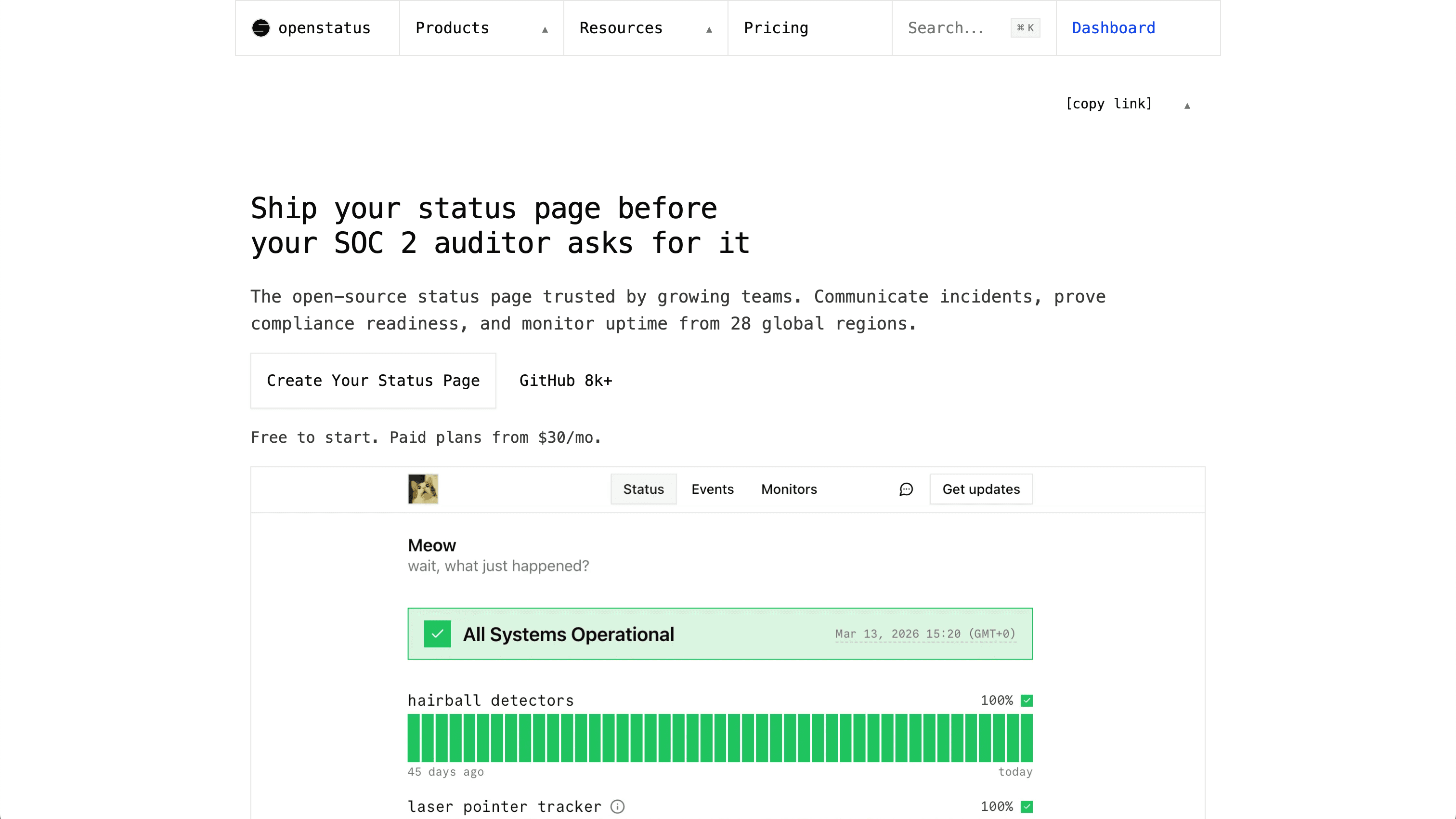
Distribution. We're devs. Our default is to ship, not DM people on LinkedIn. Shane changed that in March 2026. He set up our outbound motion, pushed us to update our homepage hero to focus on compliance, and got us actually talking about our work publicly, which led directly to launching the podcast.
Community. Slack and Discord stopped being ticket queues. We started replying fast and shipping fixes the same day. Power contributors like Moulik took things to the next level, shipping massive features like status-page i18n and importers. It reminded us why we build in the open to begin with.
The core product: rebuilding the foundation
Everything we shipped this year maps to a specific part of the user journey:
They search for a Status Page → see it's Open Source → stay for the bundled Uptime Monitoring.
1. The landing page & SEO
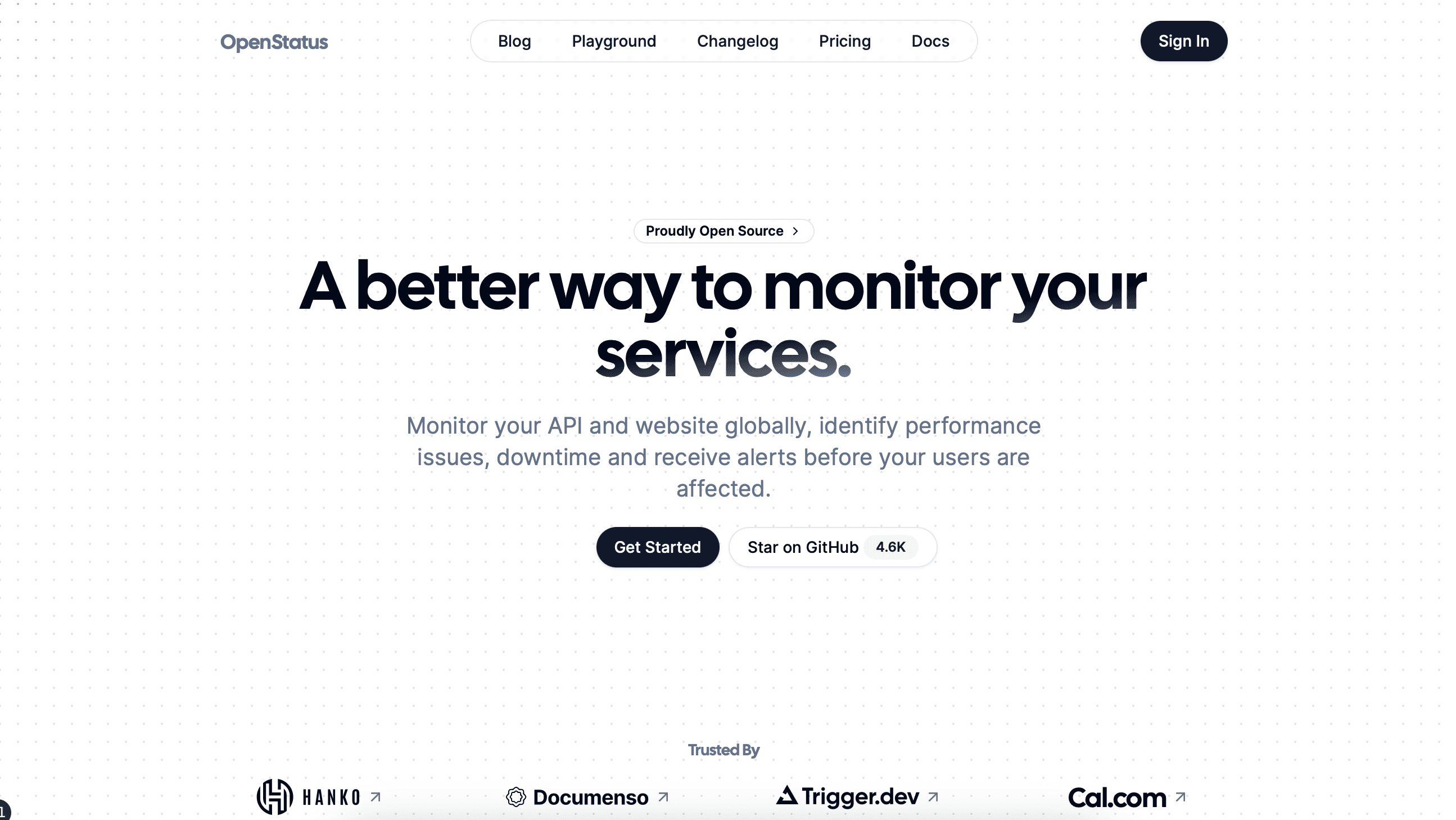
We stopped spamming content and built a PlanetScale-style MDX engine. We published dedicated use-case pages, opinion pieces (Status Pages Are Politics), and free tools like our cURL Builder and SLA Calculator. Opinionated content beat feature lists. The result? We jumped from ~40K search impressions a month to ~333K.
2. Actual open source credibility
We finally shipped a proper all-in-one self-hosted release in December 2025. We also rolled out an open-source AI skills repo, a Terraform provider, and a CLI built for both humans and agents. The half-truth of our OSS marketing is officially fixed.
3. The dashboard & status page
We completely rebuilt the dashboard with Tinybird-inspired navigation and Axiom-style context drawers.
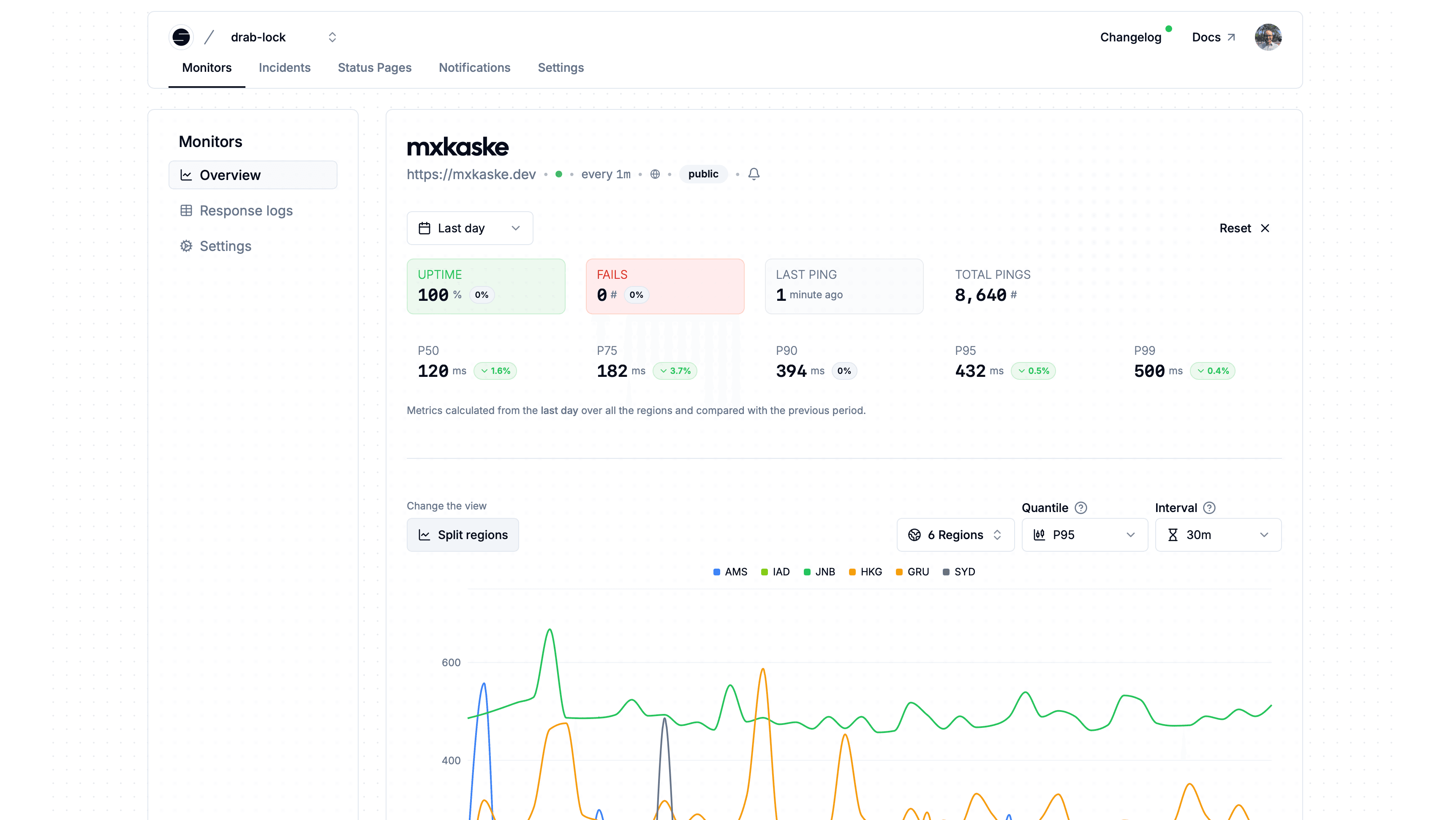
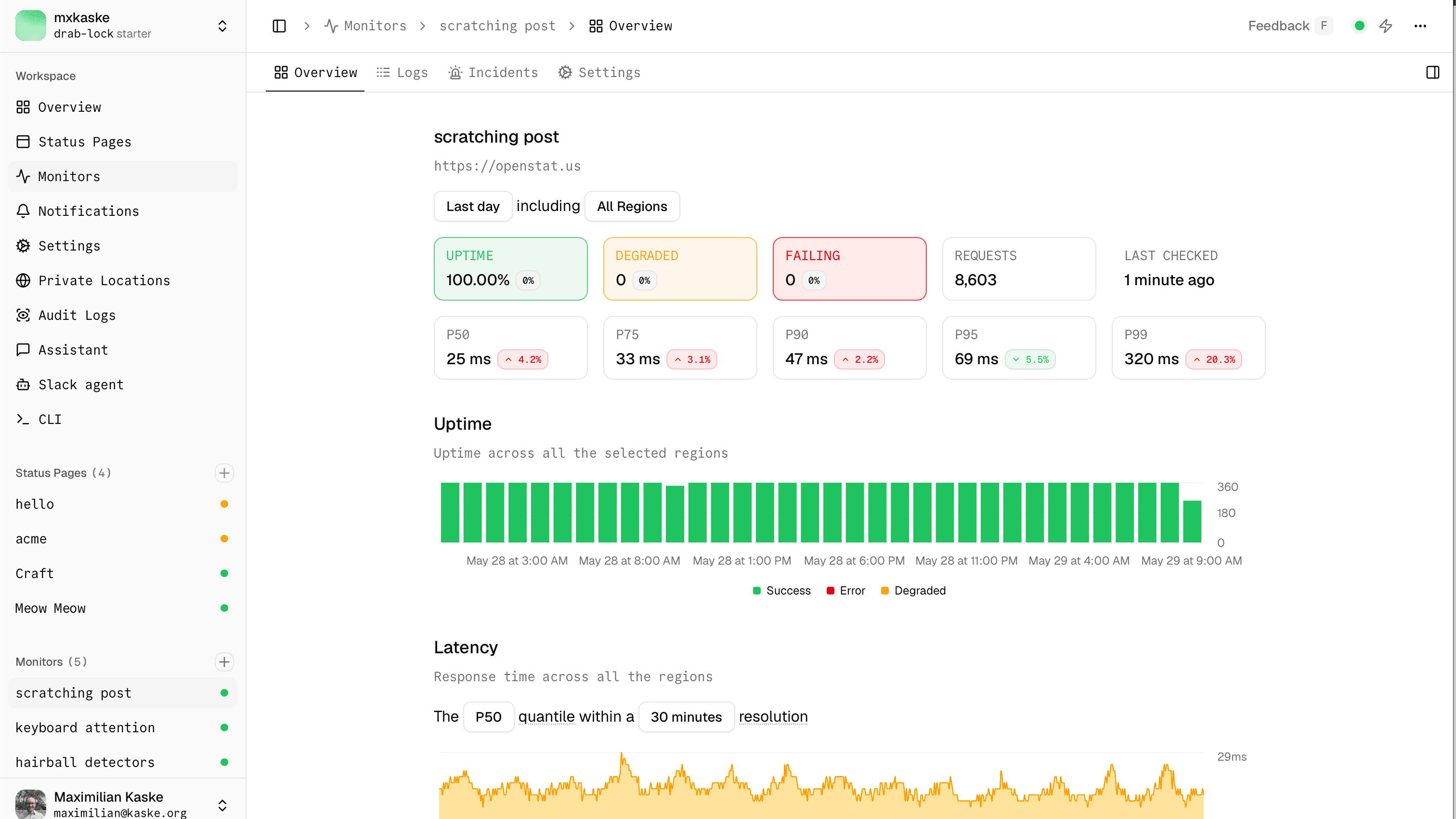
But the biggest revelation was the status page. We redesigned it, added a Theme Explorer, and built importers for our competitors. We realized that the status page is the entry point, not the monitoring. The vision for 2026 is "Stripe for Incidents": API-first primitives and ChatOps over rigid workflows.
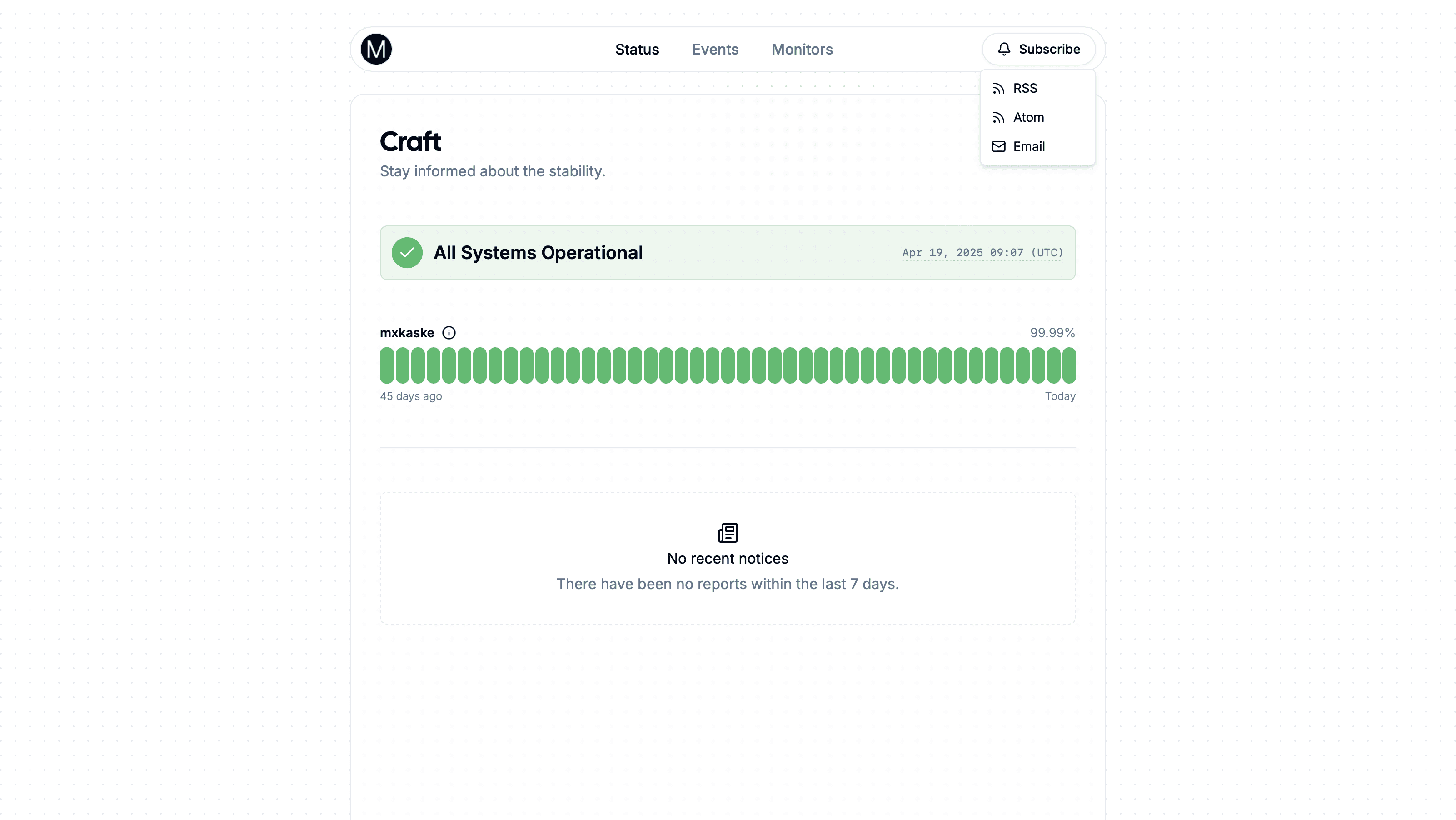
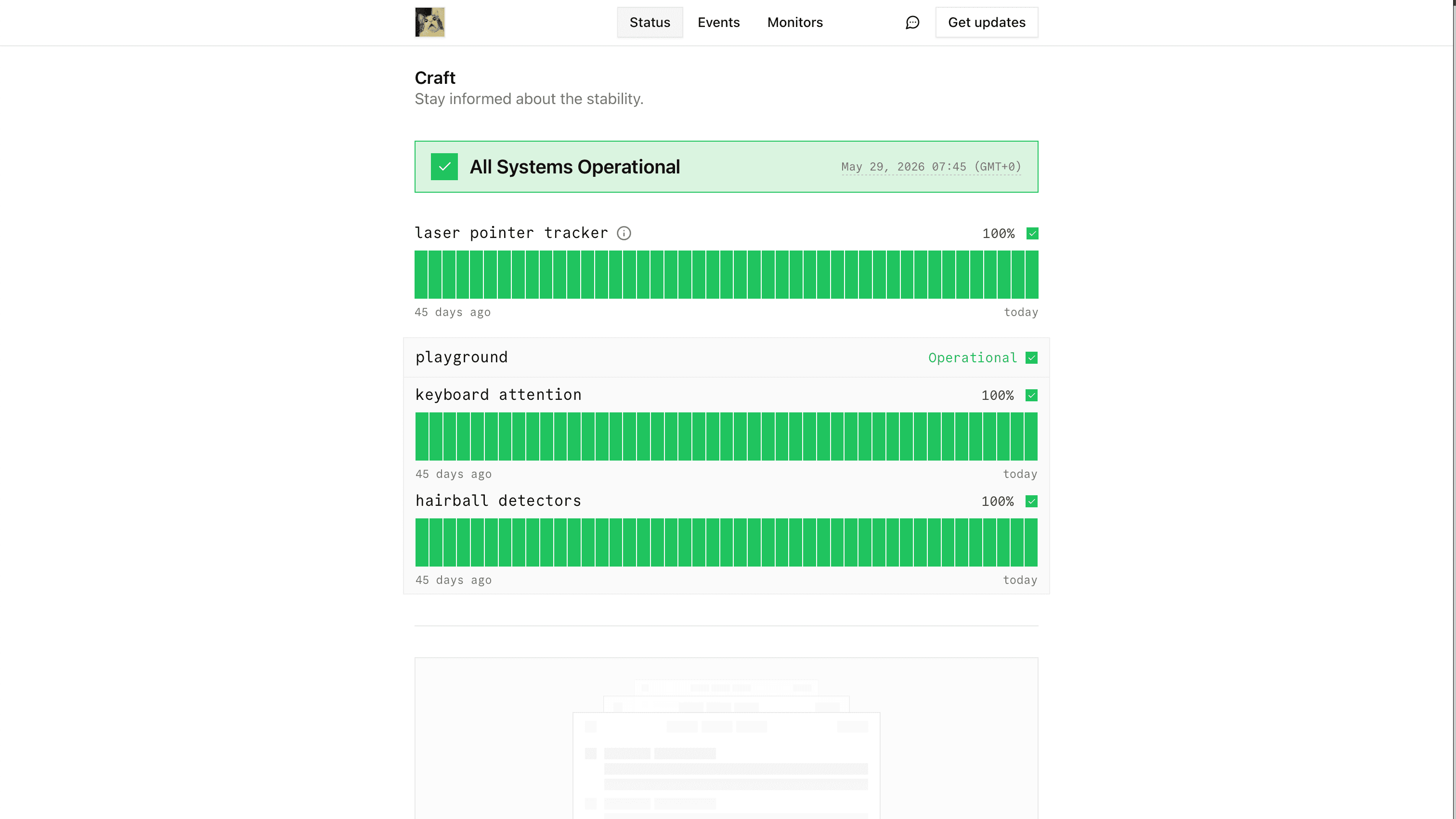
4. The architecture (our sanity)
Splitting the monorepo and migrating from tRPC + zod-openapi to ConnectRPC was the biggest unlock of the year. Moving to a unified, schema-first system with Protobuf halved our endpoint surface area. We now have one schema that's type-safe internally and curl-able publicly, all flowing through a single @openstatus/services layer with a real audit log. It also perfectly set the stage for our Slack agent and chat assistant.
The numbers (no thumb on the scale)
Vanity metrics and actual business metrics eventually decouple. We're wary of bragging, so here are the numbers we don't control.
| Metric | Mar 2025 | May 2026 | Change |
|---|---|---|---|
| GitHub stars | ~7,000 | ~8,700 | +24% |
| GitHub followers | 128 | 201 | +57% |
| Google impressions | ~650K (over 16 mo) | ~1M (over 3 mo) | ~8× rate jump |
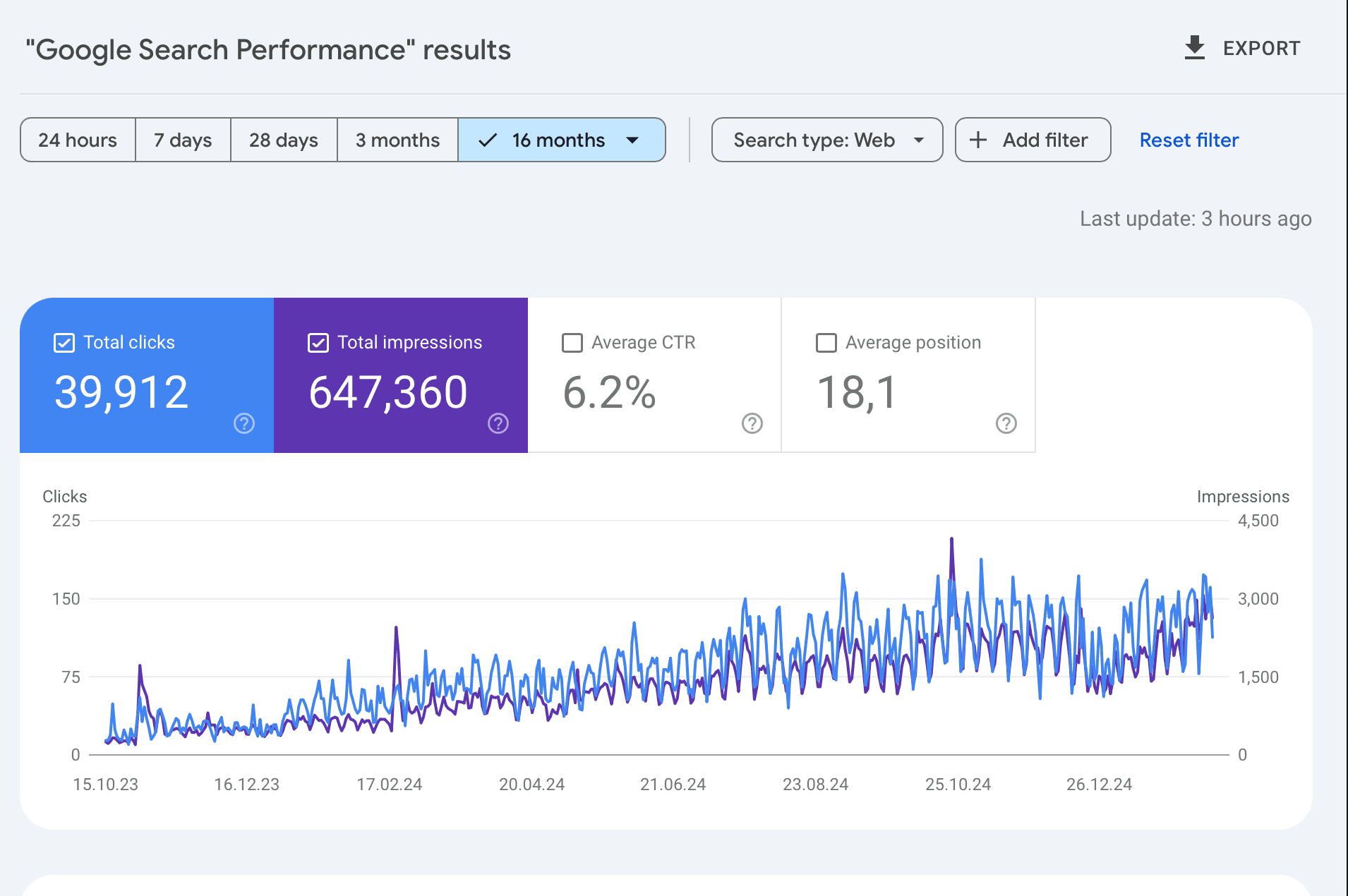
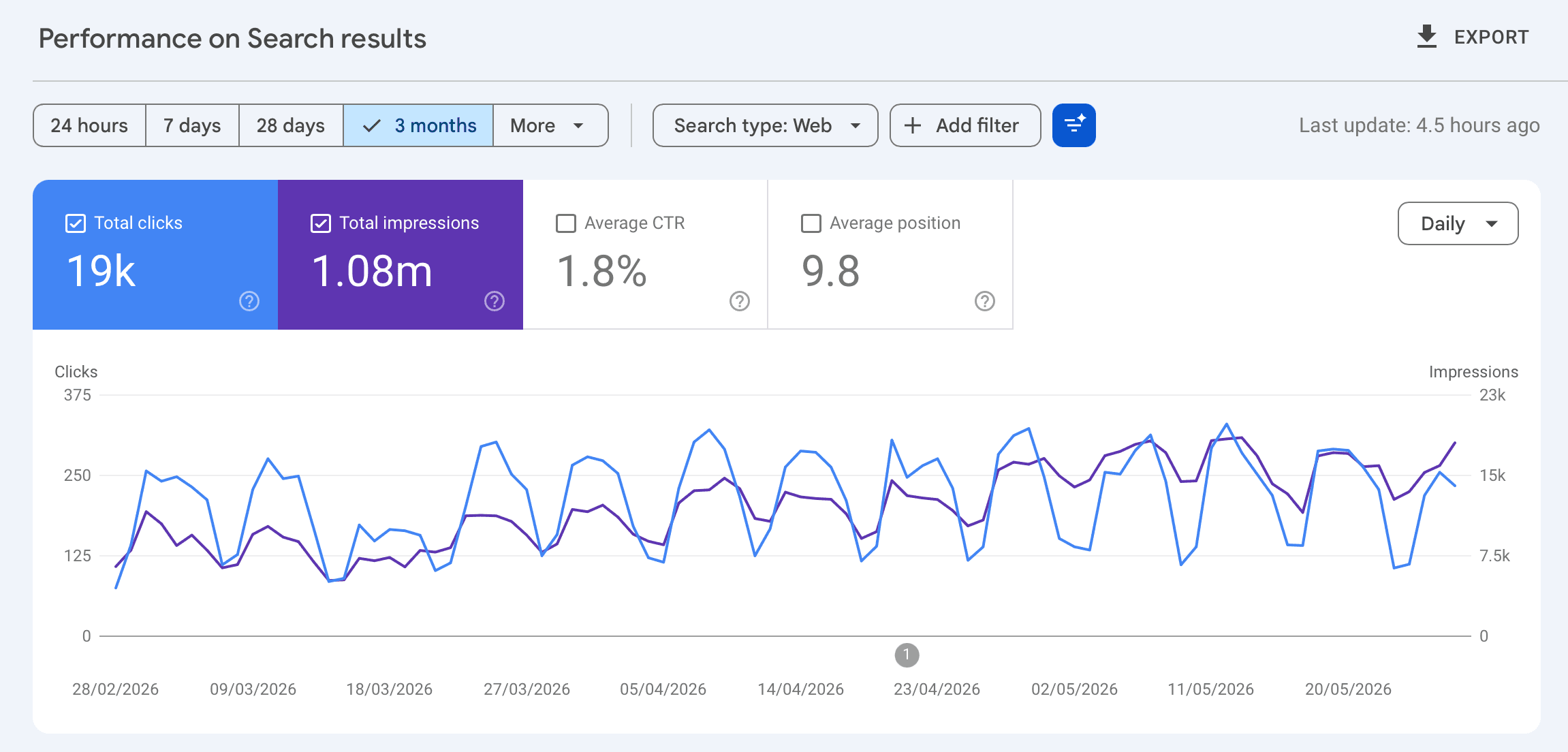
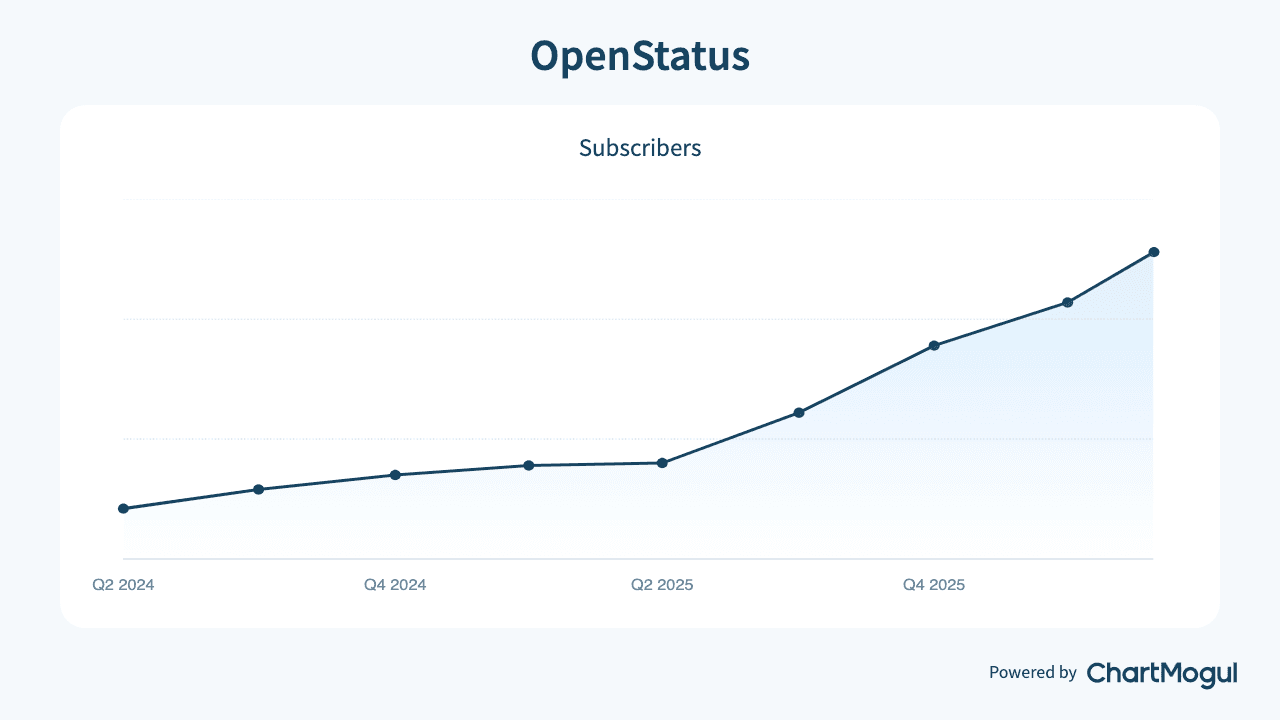
If you plot our paid subscriptions, there's a massive elbow in August 2025. That was the exact week we published the Reality Check and launched the new dashboard. We can't prove the causation, but that's the month the compound interest kicked in.
A few other moments worth dropping in: we said no to a strong acquisition offer in 2025 (we aren't done yet), and Flo Merian surprise-launched us on Product Hunt in October, where we finished #2 of the day behind Anthropic Skills. The conversion to actual users was effectively zero. We wrote the whole thing up in Our Product Hunt Launch: The Brutal Reality.
The real takeaways
- You cannot self-diagnose your positioning. The thing you can't see is the thing costing you the most. Bring someone in.
- Shipping less is a feature. Killing our ambitions for RUM and on-call cleared our heads. Subtraction is a discipline, and it matters more in the age of AI, not less.
- Refactor before you add. Splitting our apps and unifying our API meant every feature we shipped afterward took half the time.
- Opinion content beats feature content. A take with skin in the game travels further than a list of capabilities.
- Write it down. Every retrospective, every roadmap, every honest update piles up. A year from now, you'll be glad you have the archive.
Closing thoughts
12 months of openstatus, in one sentence: the work was always strategic, the bottleneck was always honesty, and the lever was always someone outside our own heads.
Emily made us name the product. Alex made us redesign it. Shane made us go out and talk about it. Colin made us a team of three. Moulik and everyone in our Slack and Discord made the whole thing feel worth doing.
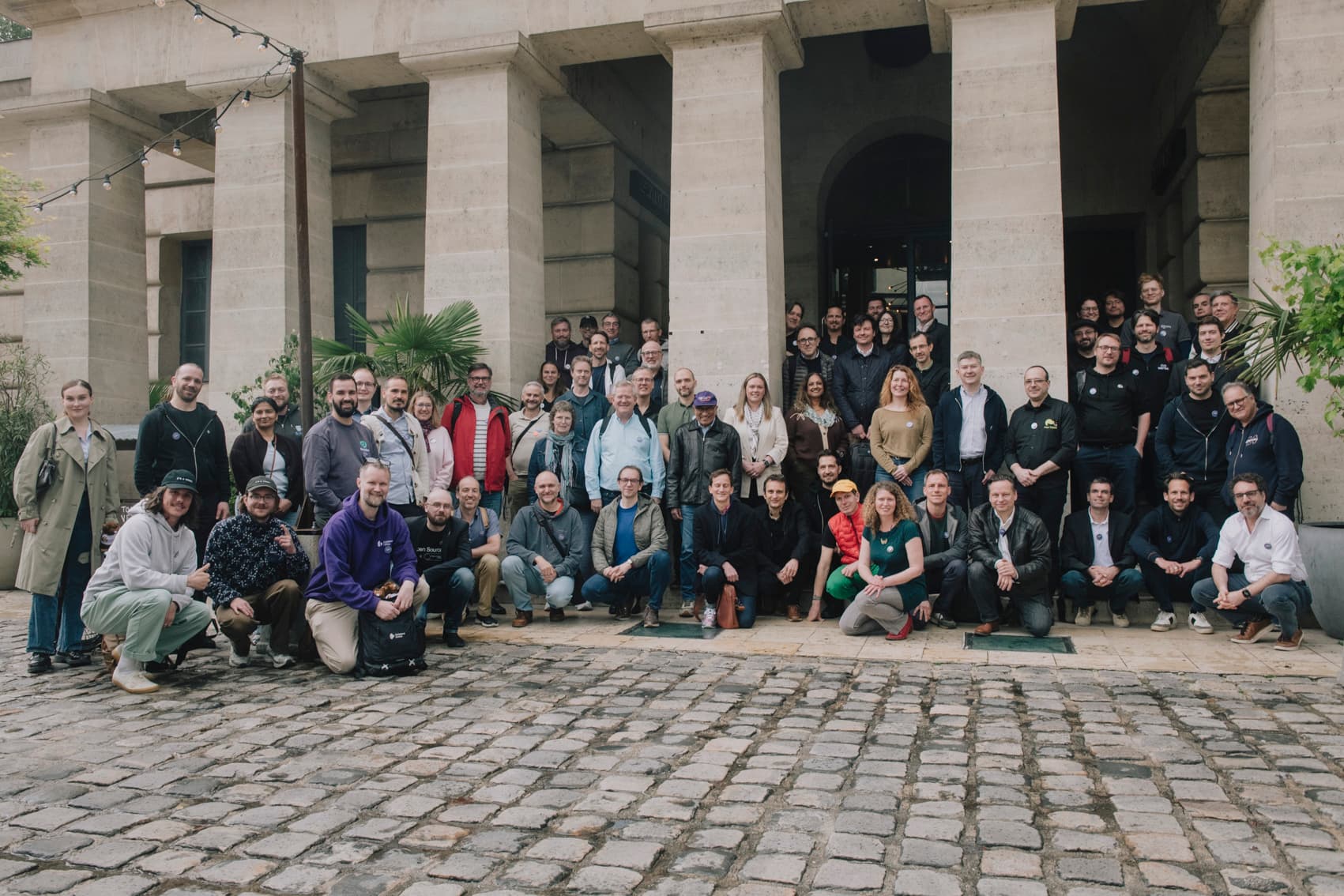
A year ago, all our work with Emily was async. This month, we finally met her in person at the Open Source Founders Summit in Paris. It felt like the circle closing. Just like our first team retreat in Munich and Kochel am See last year, where Max and I hammered out the 2026 roadmap over Bavarian beer: getting away from the screen changes everything.
PS: the best week of work is still the one where we ship a fix the same day a user asks for it. That hasn't changed. We hope it never does.
PPS: we're bookmarking all our numbers again today. Whenever the next comparison happens, this is ground zero.
So: what are you avoiding?